The 1958 Letter Behind "Beauty to Embrace in an Afternoon"
A year after moving to Weir Farm, Sperry Andrews wrote down why he wanted to be an artist. Nearly seventy years later, one line from that letter named a four-volume collection of his work.
In May of 1958, about a year after he and his wife Doris bought the Julian Alden Weir farmhouse on the line between Wilton and Ridgefield, Connecticut, Sperry Andrews sat down and wrote a short piece titled "Why I would like to be an Artist."
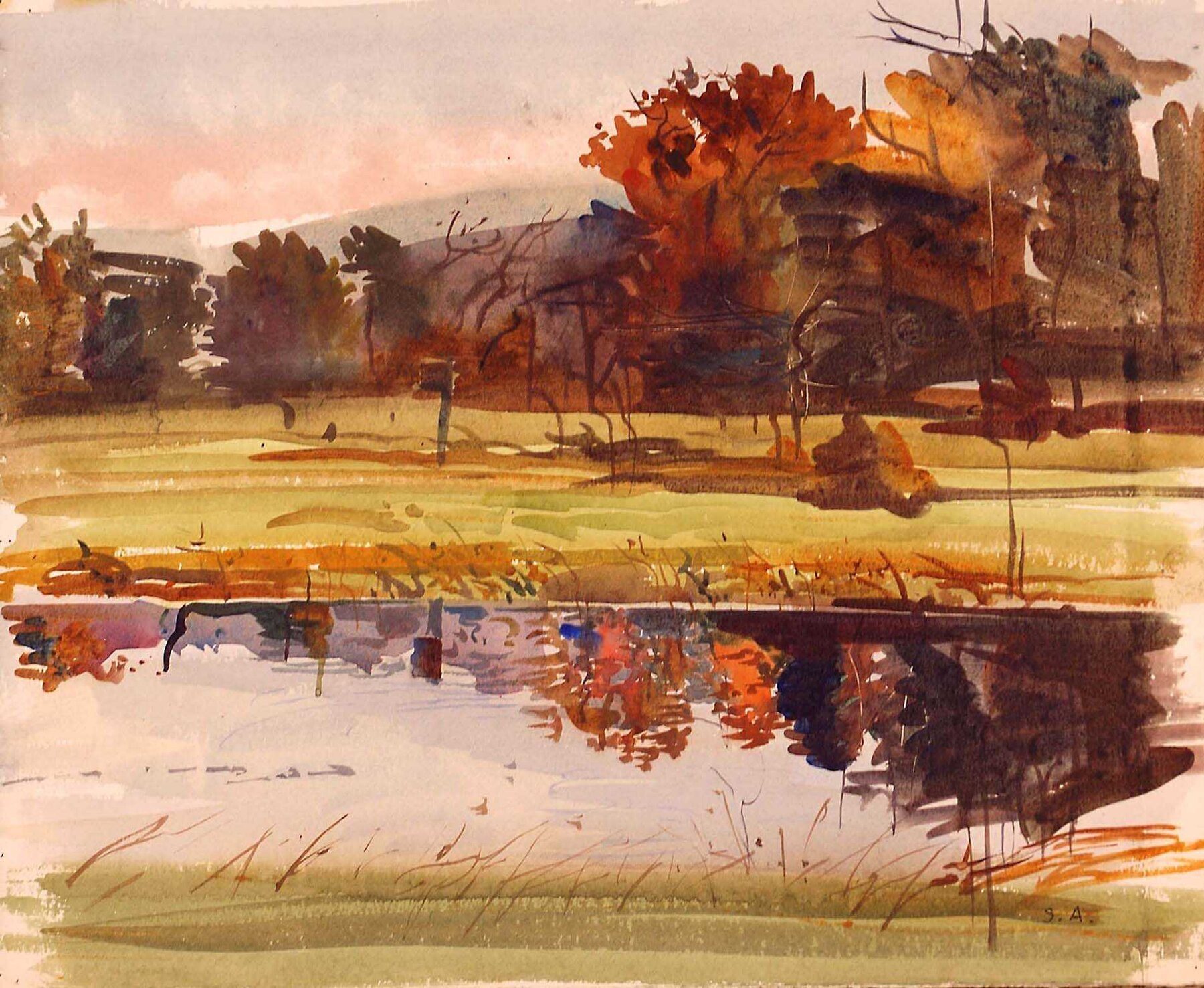
It is not a manifesto. It reads more like a man describing a friendship. He writes about Connecticut as "a kind of close beauty that's small enough to embrace in an afternoon," and he contrasts it with the grand Western scenery other painters chased. What he loved was gentler: "hills which are a synthesis with the countryside," and "an afternoon by the pond, things that go with the time of season in accord."
Getting to know a place like a friend
The heart of the letter is a description of his working method, decades before anyone wrote about it in a museum catalogue:
I like to paint from these things, where I work out-doors on the sight. I like to get to know the countryside like a friend, and through this familiarity comes understanding, the more we know it the more we can enjoy it.
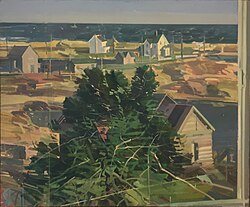
That idea runs through everything he made afterward. He painted the same house, yard, pond and fields at Weir Farm for nearly five decades, in every season. He went back to Block Island for years. Familiarity was not a limit for him. It was the point.
He closed the letter with a credo for the artist, written in parentheses as if it were a private note to himself:
(Go where the heart goes If we only could recapture the first careless rapture.)
From letter to library
When his son, A. Ballard Andrews, began gathering the work for publication, he took the title of the series from that letter. The result is Beauty to Embrace in an Afternoon, published by C. Sperry Andrews Studio Press in four volumes:
- Volume 1, Weir Farm: House, Yard, Farm, Studios, Pond, Preserve, Cora's, Flowers and Winter.
- Volume 2, Block Island: Town and Old Harbor, New Harbor, Crescent Beach, Bluffs, Vistas, Ponds, Spring House, Homes, Farms, Industrials and Bygone.
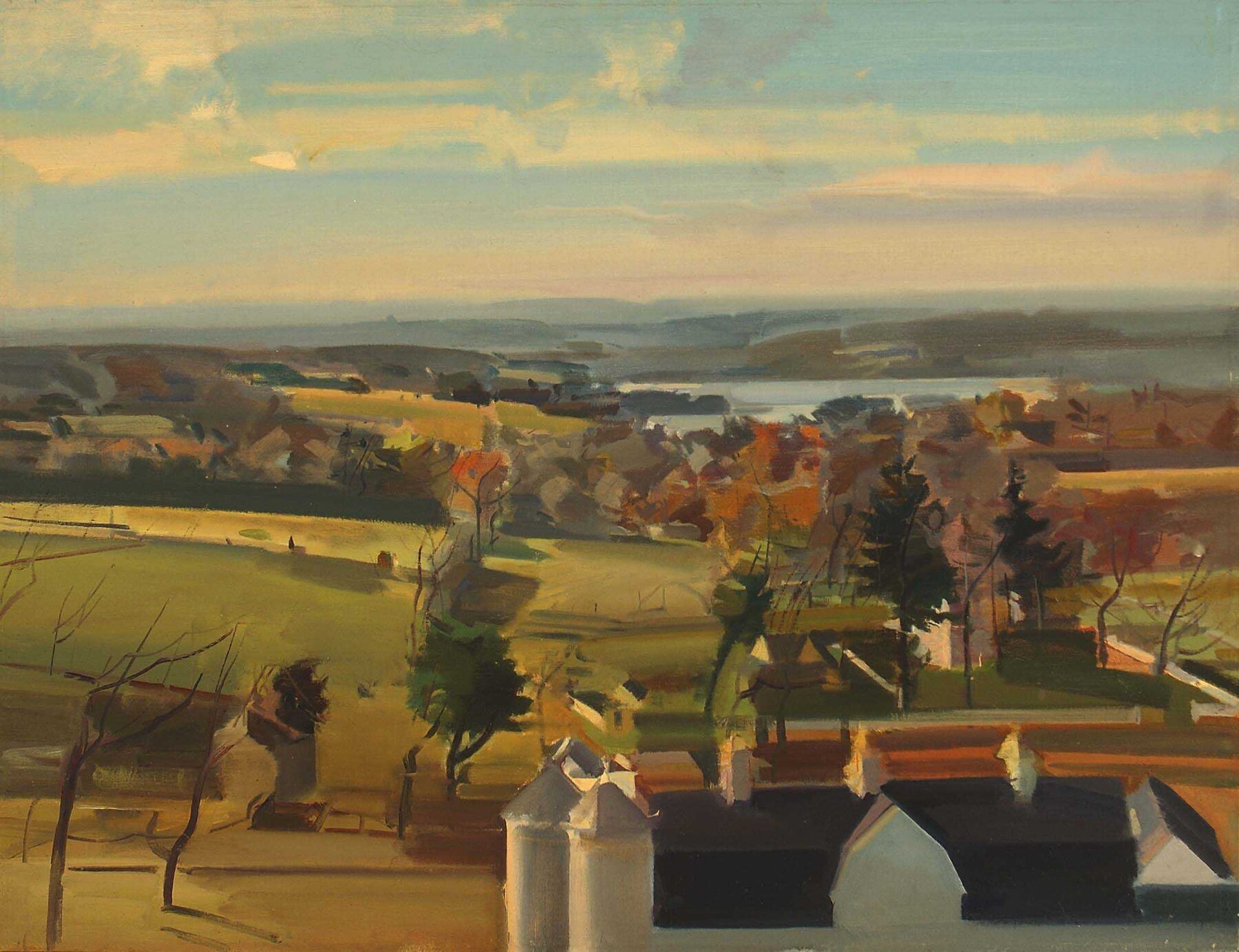
- Volume 3, Landscapes: Waterbodies, Farmlands, Architecture, Transportation and Leisure.
- Volume 4, Figurative: Graphite and Charcoal, Making of a Sketch, Watercolors, Oils, Figurative and Portraits.
In his preface, Ballard explains that the works are "arranged thematically rather than chronologically to highlight the range of his métier," and that his aim has been "to honor his work, preserve his legacy, and make his art accessible again, as much of it has remained out of public view for many years."
He also includes material from his father's own archives, including notes, diaries and letters, along with remembrances shared at the memorial service. Because "most works are undated and rarely titled," each book's index gives a simple description with media and dimensions.
Why the letter still matters
It is rare to have an artist explain, in plain language and at the start of his most productive period, exactly what he intends to do. Reading the 1958 letter next to the paintings that followed is a little like reading a promise and then watching it kept, one afternoon at a time.
The books are available in softcover and hardcover on Amazon and Lulu, with Volume 1 also available as a Kindle ebook and on Apple Books. You can find every edition on the Books page.