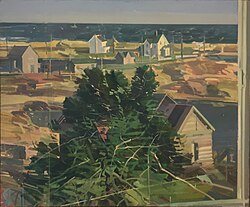
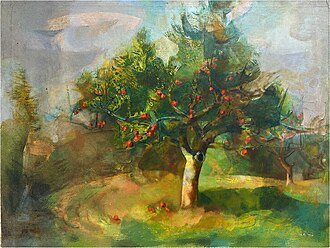
Notes From the Sketchbook: How Sperry Andrews Prepared to Paint
In the late 1970s Sperry Andrews wrote practical notes to himself about paper, palettes, weather and the moment. They read like advice from a patient teacher.
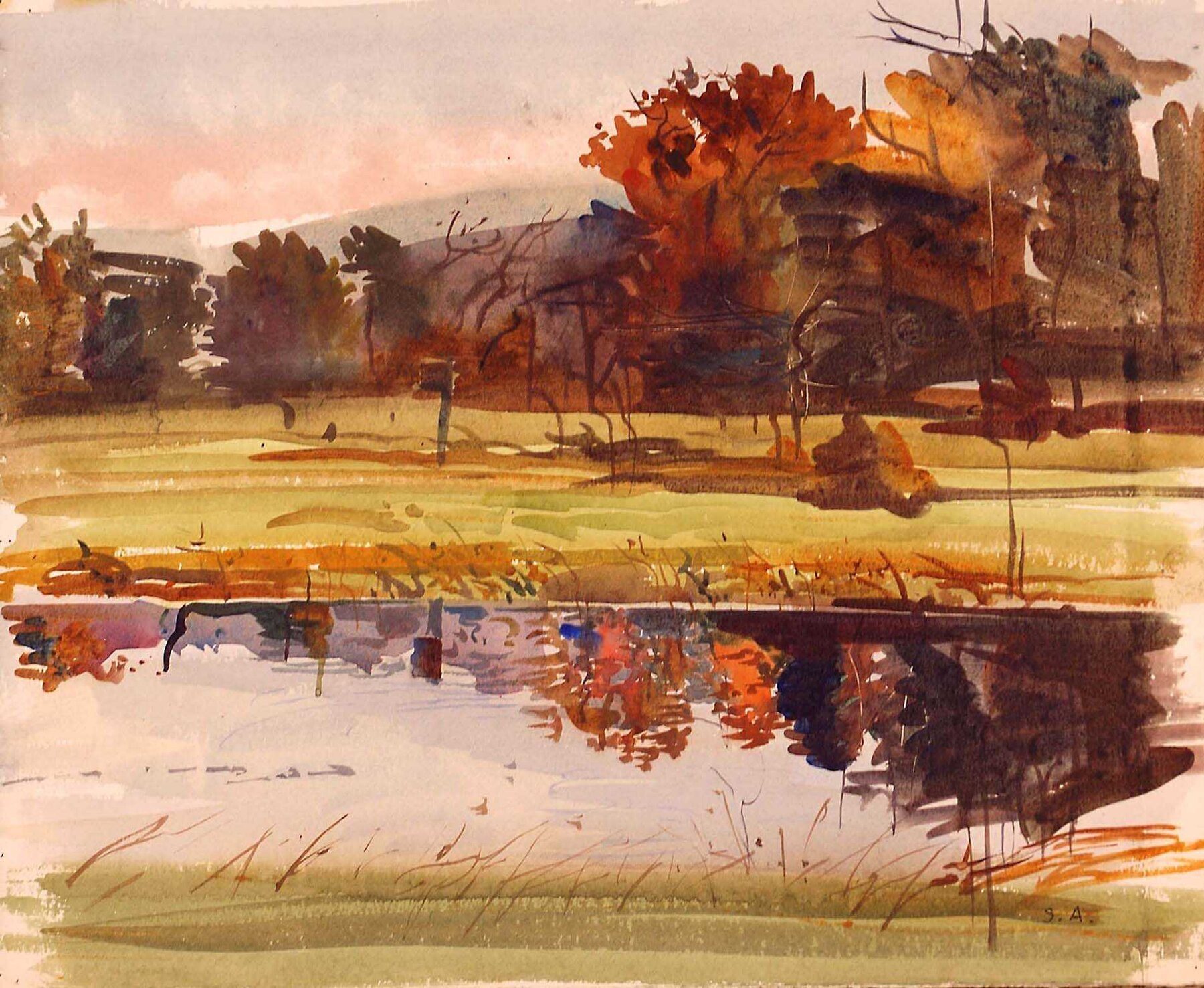
Sperry Andrews taught for years, at the Silvermine School of the Arts in Westport and the Wooster Community Arts Center in Danbury. You can hear the teacher in the notes he kept in his sketchbooks in 1977 and 1978. They are short, direct and almost entirely practical. Here are some of the ideas that come up again and again.
Be ready before the light changes
Working outdoors means the subject will not wait for you. Andrews was blunt about preparation:
You must be completely organized within your reach, the essentials. Don't lose time fussing about locating colors, brushes etc.
And again: "Have your palette set up before you begin, develop the habit of checking it each day. Often the last minutes of a particular light are the most rewarding."
Don't try too much
A recurring theme is restraint. "Make the observation, yet do not attempt too much. It is important to be ready to spot the moment." Later he writes, "Don't try too much, go for a small bit. Get to love a place."
That last phrase, get to love a place, echoes the letter he wrote twenty years earlier about getting "to know the countryside like a friend."
Bad weather can help
Many painters wait for a bright day. Andrews suggested the opposite:
Try a study when the weather is low, a kind of dullness will often lead to a better reading of different planes of color, lights and darks are more apparent. Lights and values do not change so rapidly. Weather can be an important advantage.
It is a useful reminder when you look at his gray harbor views and winter fields. Those quiet days were often a choice, not a compromise.
Act before thinking takes the edge off
He was wary of overthinking. "Too much thinking takes the edge off the first excitement, which means a lot for the fresh quality one desires." By November 1978 he had boiled it down further: "Often the best results are the result of quick action. To think may waste away the moment."
This is the eyeballer in his own words. Preparation and practice came first so that, in front of the subject, he could simply respond.
On paper and the brush
Even his comments on materials are about responsiveness. "The right kind of paper is the paper that is right for your needs," he wrote, one that "behaves just the way you like it to act." And on watercolor: "Remember the brush need not rub the paper at all, so to say. You mix the wash that you think will match the tones in the object."
Accepting the off days
Finally, he was honest about failure. "It will take numerous bad days to have a fairly successful time," he admitted, and the ideal day "seldom does present itself."
For anyone who paints, or anyone who simply wants to understand how these pictures came to be, the notes are worth reading in full on the Reflections page.