The artist

Charles Sperry
Andrews III

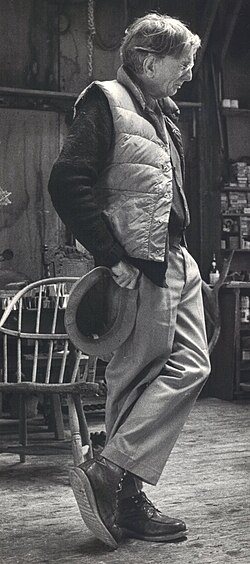
1917 to 2005. Landscape painter, educator, National Academician and, with his wife Doris, a preserver of Weir Farm.

  • National Academician, 1994
  • Weir Farm, 1957 to 2005
  • Collections incl. Wadsworth Atheneum
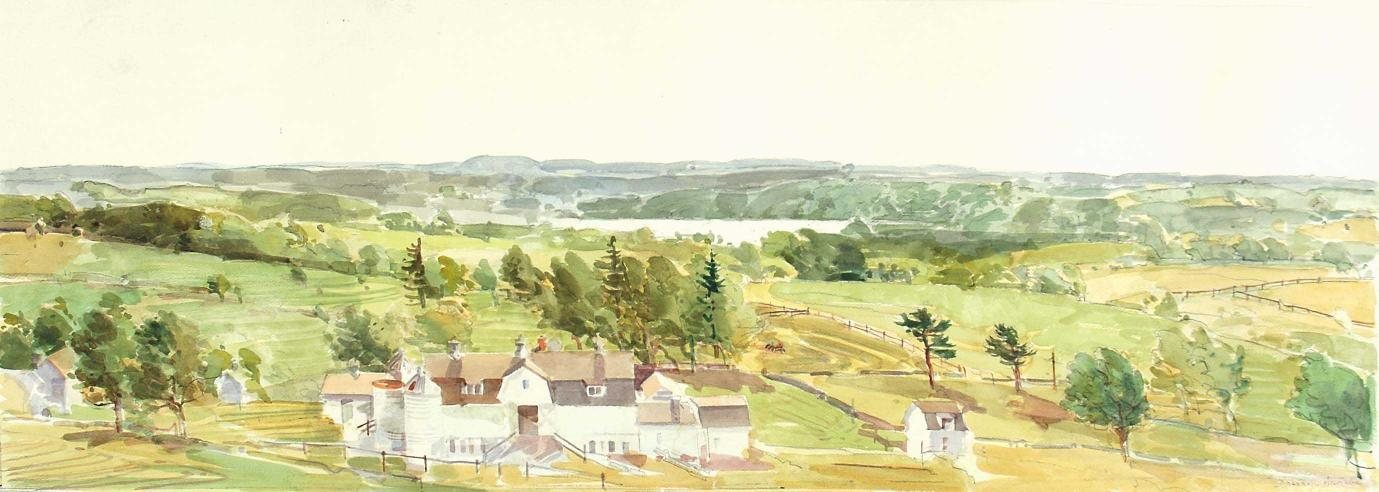
Keeler Farm, North Salem, NY, by C. Sperry Andrews III
Untitled landscape
Keeler Farm, North Salem, NY, c. 1980
01

1917 to 1941

Early years and training

Charles Sperry Andrews III was born in Manhattan in 1917, and in 1920 his family moved to Bronxville, New York. He began sketching as a child, and with his father’s encouragement he studied at the National Academy of Design from 1933 to 1936. In 1938 his work appeared for the first time in the Academy’s Annual Exhibition, the beginning of a relationship with the institution that would last his whole career.
02

1941 to 1948

The war and the Art Students League

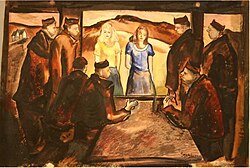
He enlisted in the United States Army in February 1941 and in September was sent to Iceland with Task Force 4. There he produced gouache sketches of the volcanic landscape, churches, GIs and residents. After transferring to the European Theater, he landed in France on June 9, 1944, earned two Bronze Service Stars for the Northern France and Central Europe and Rhineland campaigns, and returned home in April 1945.

Under the GI Bill he resumed his studies at the Art Students League of New York from about 1946 to 1948, where the modernist Morris Kantor introduced him to Cubist structural composition. In 1947 he married the artist and preservationist Doris Bass.

“His lonely sojourn during military service in the barrens of Iceland… awakened a sense of awe at the majesty of nature for him.”M. Chabot, eulogy, 2005
GIs and Locals, Iceland, by C. Sperry Andrews III
GIs and Locals, Iceland
03

The work

An eyeballer, painting on the spot

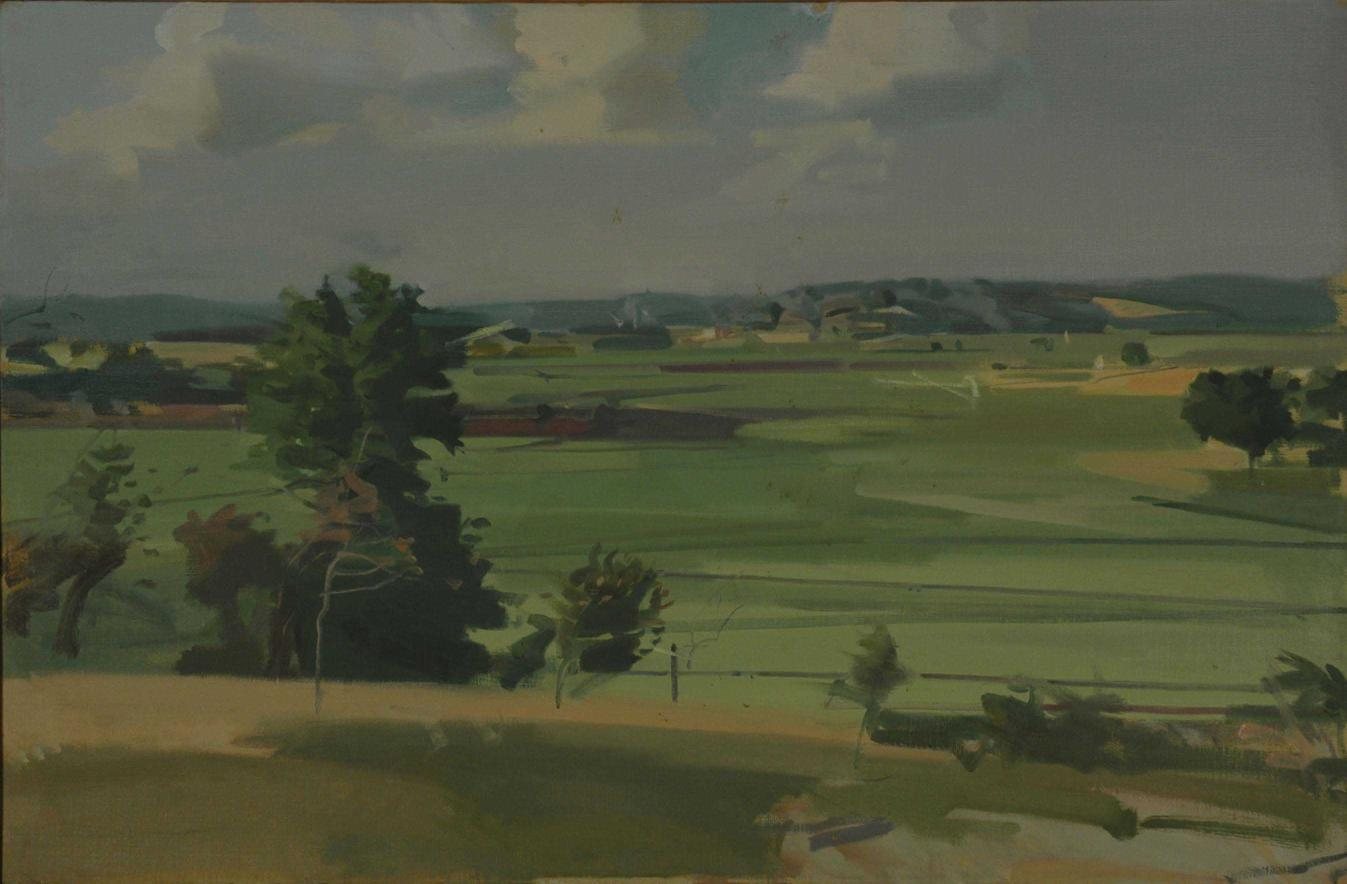
Andrews was primarily a plein air landscape painter, working in oil, watercolor, pastel, gouache, scratchboard, etching, graphite and charcoal. The majority of his works were created at locations throughout Connecticut, New York and Rhode Island, and he used a modified Willys Jeep as a mobile studio for overnight painting trips.

He later moved from his post-war Cubist style toward realism, though traces of it remain in his landscapes of the 1960s. In the 1980s The New York Times critic Vivien Raynor noted the color and structure of his New England landscapes. Throughout his career he also attended life drawing sessions, and he taught at the Silvermine School of the Arts in Westport and the Wooster Community Arts Center in Danbury.

“I’m an eyeballer, I’d say. I’m inspired by things I see.”Sperry Andrews
From the Landscapes collection, by C. Sperry Andrews III
From the Landscapes collection
04

1957 to 2005

Weir Farm

After moving to Connecticut he befriended the sculptor Mahonri Young, son-in-law of the American Impressionist J. Alden Weir, and painted on Young’s property. In 1957 Sperry and Doris purchased the Weir farmhouse on the border of Wilton and Ridgefield, and its house, barns, studios, pond and woods became one of the primary subjects of his work.

To keep the land from commercial development, the couple worked with local preservation and environmental groups. In 1990 Congress designated the property the Weir Farm National Historic Site, later a National Historical Park. He lived and kept his studio there until his death on July 14, 2005.

See the Weir Farm gallery

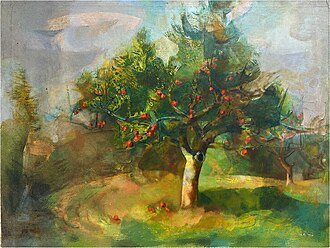
Apple Tree, Weir Farm, c. 1960, by C. Sperry Andrews III
Apple Tree, Weir Farm, c. 1960
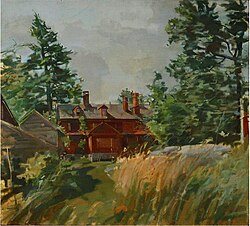
Weir House, Weir Farm, by C. Sperry Andrews III
Weir House, Weir Farm
  1. 1917

    Born Charles Sperry Andrews III in Manhattan on October 5.

  2. 1920

    His family moves to Bronxville, New York, where he begins sketching as a child.

  3. 1933

    Studies at the National Academy of Design through 1936.

  4. 1938

    First of many showings in the National Academy of Design Annual Exhibitions.

  5. 1941

    Enlists in the U.S. Army in February and is deployed to Iceland in September with Task Force 4, where he makes gouache sketches of the volcanic landscape, churches, GIs and residents.

  6. 1944

    Lands in France on June 9, shortly after Normandy. Earns two Bronze Service Stars before returning home in April 1945.

  7. 1946

    Resumes study on the GI Bill at the Art Students League, where Morris Kantor introduces him to Cubist structure.

  8. 1947

    Marries the artist and preservationist Doris Bass.

  9. 1950

    Wins the First Julius Hallgarten Prize at the National Academy of Design.

  10. 1952

    Solo exhibitions at Ferargil Gallery, New York, in 1952 and 1953.

  11. 1957

    Sperry and Doris purchase the Julian Alden Weir farmhouse on the Wilton and Ridgefield line.

  12. 1958

    Writes the letter “Why I would like to be an Artist,” which gives the books their title.

  13. 1959

    Two early paintings appear in Ernest W. Watson’s Composition in Landscape and Still Life.

  14. 1990

    Congress designates Weir Farm a National Historic Site. Elected Associate National Academician.

  15. 1993

    Elected a member of the Century Association in New York.

  16. 1994

    Elected a full National Academician.

  17. 2005

    Dies on July 14 at age 87, having lived and painted at Weir Farm until the end.

  18. 2026

    His son A. Ballard Andrews publishes the four volumes of Beauty to Embrace in an Afternoon.

Record

Exhibitions, honors and collections

Exhibitions

  • National Academy of Design, New York, NY, Annual Exhibitions 1938, 1940, 1947, 1950, 1952, 1958, 1993
  • Ferargil Gallery, New York, NY, 1950, 1952 (solo), 1953 (solo)
  • Silvermine Guild 1950, 1951
  • St. Lawrence University 1952
  • Kipnis Gallery, 1954, 1955
  • Slater Memorial Museum, Norwich CT, 1956, Group Exhibition
  • Wadsworth Atheneum, Hartford, CT, 1957, Group Exhibition
  • New Britain Museum of American Art, New Britain, CT, 1962, 1983
  • Larcada Gallery, New York, NY, 1966, 1969
  • Bethel Gallery, Bethel, CT, 1977
  • Katonah Gallery, Katonah NY, 1983
  • Lyme Academy Gallery, Old Lyme, CT, 1989
  • National Academy of Design, New York, NY. Group Exhibition, 1993
  • Weir Farm National Historic Site, Wilton, CT, 1993, 2006, 2014, 2017
  • Jessie Edwards Gallery, Block Island RI, 2011, 2012
  • Block Island Historical Society, Block Island RI 2012-2015
  • Wilton Library, Wilton CT, 2012

Honors and Awards

  • First Julius Hallgarten Prize, National Academy of Design, Annual Exhibition, New York, NY, 1950
  • Major Award, Annual All New England Exhibition, Silvermine Guild of Artists, 1951
  • First Prize, St. Lawrence Valley Exhibition, Canton, NY, 1952
  • William Bradford Green Memorial Prize for Landscape, Connecticut Academy of Fine Arts, 1954, 1956
  • Salmagundi Club Award for a U.S. Citizen, Audubon Artist, 20th Annual Exhibit, New York, NY, 1962
  • Award, Connecticut Academy of Fine Arts, 1969
  • Certificate of Merit, National Academy of Design, New York, NY, 1978
  • John Pike Memorial Award, 163rd Annual Exhibition, National Academy of Design, New York, NY, 1988
  • Century Association, New York, NY, 1993
  • Associate National Academician, National Academy of Design, New York, NY, 1990
  • National Academician, National Academy of Design, New York, NY, 1994

Collections

  • American Academy and Institute of Arts and Letters, New York, NY
  • Columbus Gallery of Fine Arts, Columbus, OH
  • Wadsworth Atheneum, Hartford, CT
  • New Britain Museum of American Art, New Britain, CT
  • National Academy of Design, New York, NY
  • Miami University Art Museum, Oxford, OH
  • Weir Farm National Historical Park, Wilton, CT

Studies

  • The National Academy of Design, New York, NY, 1933-1936
  • The Art Students League, New York, NY, (1946-1948 approx.)

Teaching

  • Silvermine School of the Arts, Westport, CT
  • Wooster Community Arts Center, Danbury, CT

Bibliography

  • Connecticut Contemporary Painting, 1951
  • “Sperry Andrews,” American Artist Magazine, 1952
  • “Painting at the Site of American Impressionism,” American Artist Magazine, 1993

Original works

Bring a Sperry Andrews home

Original oils, watercolors and drawings are available to collectors, for homes, offices and hospitality spaces. Inquire about a single work or a group of pieces.

Where the work was made

Painted on the spot, across the Northeast

He finished his paintings outdoors, in front of the subject. Choose a place on the map to see the work made there.

Loading map…